
Braids, texture, and upkeep
Hair guide
Men’s Braids Guide: How to Choose a Style That Fits Your Routine
A practical guide to comparing braid patterns, length, hairline, maintenance, and the everyday commitment behind a braided hairstyle.

Decide what you want the style to do
“Braids” describes a wide range of looks, from neat straight-back rows to box braids, feed-in patterns, twists, and designs that use parting as the main visual feature. Before looking for a reference, decide whether your priority is a clean everyday shape, a bold pattern, easier gym and travel days, protective styling, or a style that can grow out without needing constant reshaping. The same hair can support very different choices depending on that goal.
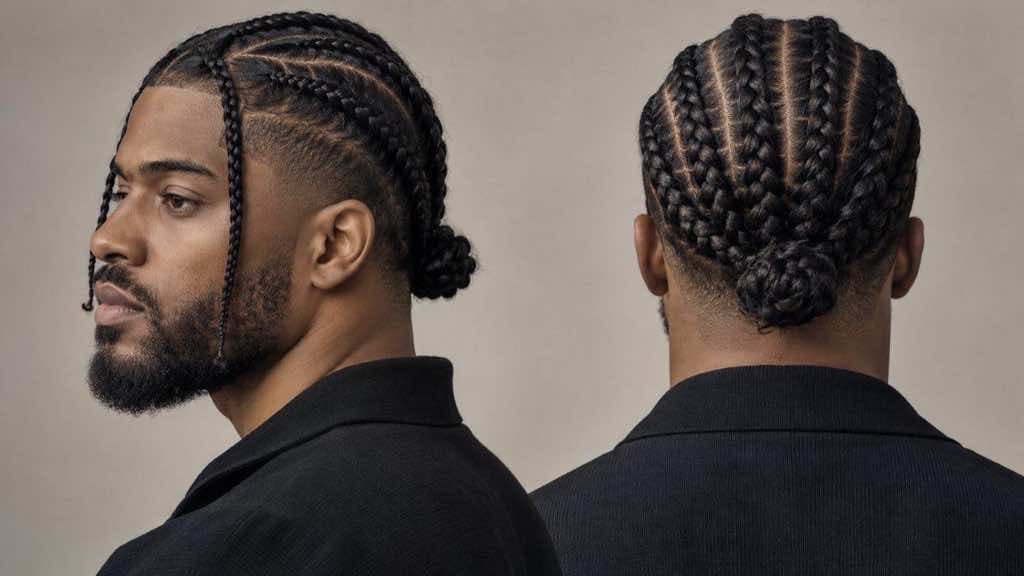
Think about how visible you want the scalp and parting to be. Small, precise sections create a detailed look but can take longer and may require more tension control. Larger sections create a stronger graphic pattern and can feel more relaxed. A style with loose ends, beads, or color changes also has a different visual weight from a close-to-the-head design. Naming the outcome first helps you avoid choosing a reference only because it looks impressive in a single photo.
Match the design to hair length, density, and comfort
Length controls what a braid can hold and how much the finished pattern can move. Density affects the size of the sections and the amount of fullness at the roots. Texture affects grip, shrinkage, and how the style will look after washing or sleeping. A reference worn by someone with a different combination of these factors may still be useful, but it should be treated as a direction rather than a promise.
Comfort matters just as much as appearance. A style that feels too tight, causes persistent pain, or pulls at the hairline is not a successful style. Tell your braider about sensitivity, previous tension issues, thinning areas, and how long you want to keep the look. If a pattern needs to be adjusted to protect comfort or hair health, that adjustment is part of the design process, not a compromise.
Use an AI preview to compare pattern and proportion
A braid preview is most useful when you compare a small number of clear differences. Try a straight-back pattern against a design with a visible parting change. Compare smaller sections with larger sections. Test whether you prefer the hairline open or softened by a few front pieces. These comparisons answer visual questions that are hard to explain with words alone, especially when you are choosing between several references.
For the cleanest starting point, use a front-facing portrait with even light, a neutral expression, and the hairline visible. Avoid hats and heavy filters. If the back or side pattern is important, include a reference image for that angle when speaking with the braider. The preview can establish the front silhouette, but it cannot show every technical detail of a real installation.
ガイドを実践する
Preview braids for men
鮮明な写真から始め、目的の異なるいくつかの案を比較し、次のスタイルを決めるための視覚的な参考として活用しましょう。
Plan for the full life of the style
Every braided style has a beginning, middle, and end. The first day shows the crispest parting and the most controlled edges. After several days, the style may soften and become more natural. Later, new growth changes the shape and the hairline becomes more visible. Ask how long the style is expected to look good, how to protect it at night, how to clean the scalp, and when it should be removed. Maintenance is part of choosing the style, not an afterthought.
Your routine should also influence the design. Frequent swimming, heavy exercise, helmets, hats, or a job that requires hair to be secured can affect both comfort and longevity. If you travel, choose a style that can be refreshed with the products and time you will realistically have. A slightly simpler pattern that fits your week will usually look better over time than a complex pattern that becomes difficult to maintain after the first few days.
Bring a useful reference to your braider
Save one image that shows the pattern, one that shows the desired length or finish, and one that shows what you do not want. Add notes about parting size, loose ends, accessories, and how much scalp visibility feels comfortable. If you use an AI preview, label it honestly as a concept. This lets the braider use professional judgment to adapt the design to your hair and scalp instead of trying to copy an image that may have been generated or edited.
Ask direct questions before starting: Is the requested length sufficient? How much time will the appointment take? What tension and products will be used? How should the style be maintained? What signs mean it should be removed? Clear expectations protect both the visual result and the condition of your hair.
Choose the style you can wear with confidence
The best braid style is a balance between pattern, proportion, comfort, and routine. Face shape can help you think about where the design draws attention, but it should not override your identity or preferences. Some people want a clean, symmetrical look; others want movement, contrast, or an intentionally irregular design. There is no single correct answer.
Use a preview to reduce uncertainty and sharpen the conversation. Then rely on a skilled braider to make the technical decisions that a photo cannot show. When the visual idea and the real-world plan agree, you are much more likely to enjoy the result beyond the first photograph.
ガイドを実践する
Preview braids for men
鮮明な写真から始め、目的の異なるいくつかの案を比較し、次のスタイルを決めるための視覚的な参考として活用しましょう。